
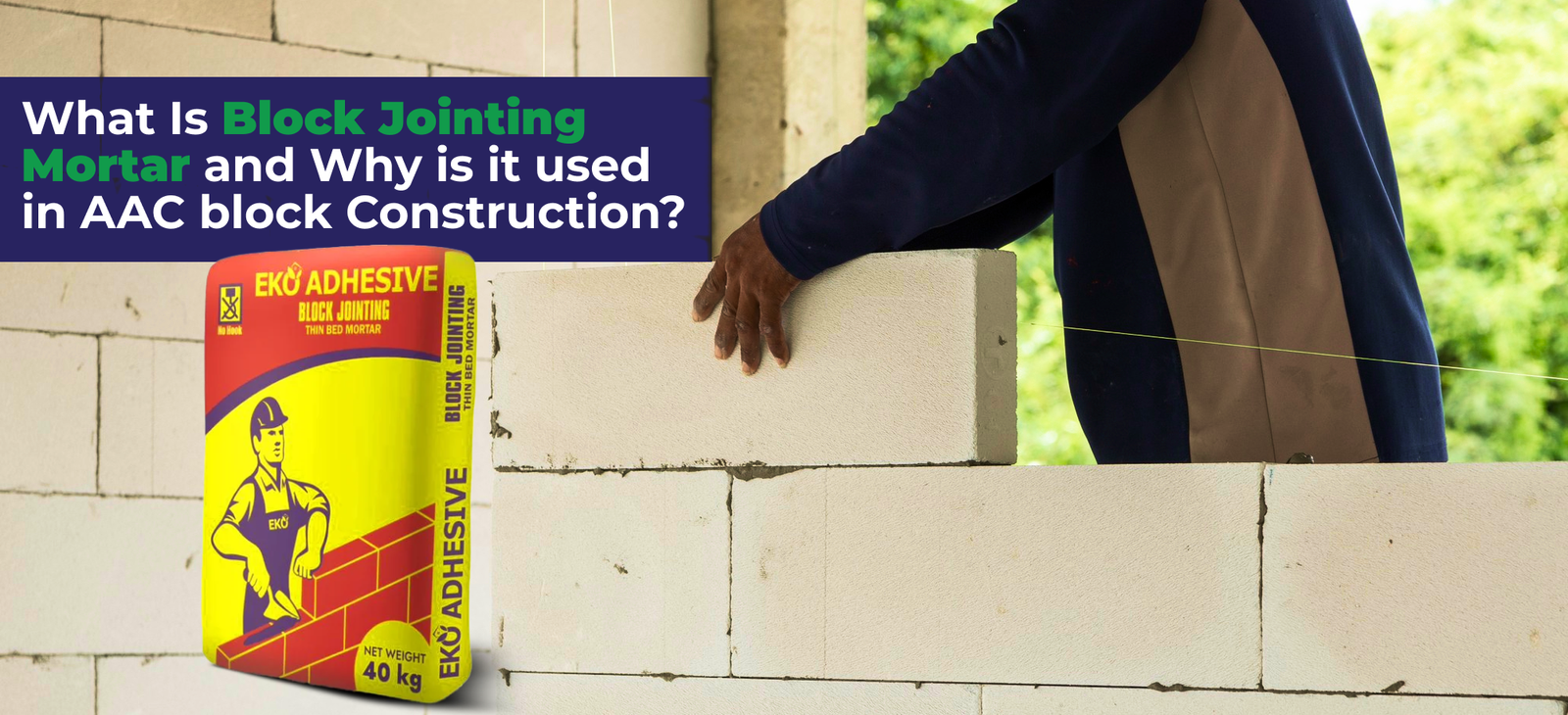
Block jointing mortar is a specially formulated, pre-mixed cement-based adhesive designed for joining lightweight construction blocks such as AAC blocks, CLC blocks, and fly ash bricks. Unlike traditional sand-cement mortar, it comes as a ready-to-use dry mix that only requires water for preparation.
Key Features and Advantages of Block Jointing Mortar
- Composition: A balanced mix of graded sand, high-quality cement, and performance-enhancing polymers and additives.
- Thin-Joint Application: Designed for thin joints of just 2–3 mm, compared to 10–12 mm in traditional mortar.
- High Bond Strength: Offers superior adhesion for durable and dimensionally stable walls.
- Faster Construction: Ready-mix formula saves time and reduces labor costs.
- Less Water Consumption: Requires minimal water, and many formulations are self-curing, reducing the need for additional curing.
- Reduced Wastage: Factory-made mix ensures consistent quality and minimal on-site waste.
- Smooth Finish: Creates a smoother wall surface, minimizing plastering requirements.
Application Areas
- AAC block walls
- Fly ash brick masonry
- Partition and infill walls
- High-rise and lightweight structures
How to Apply Block Jointing Mortar?
- Preparation: Clean the block surface and lightly moisten it.
- Mixing: Add the recommended amount of water to the dry mix as per the manufacturer’s instructions.
- Application: Spread a thin 2–3 mm layer using a notched trowel.
- Placement: Place the block gently and align it with light tapping.
- Curing: Most block adhesives are self-curing, but light misting may be needed in hot weather.
Benefits of Using Block Jointing Mortar
- Economic: Saves on material, time, and labor.
- Environmental: Encourages water conservation, reduces construction waste, and enhances thermal insulation properties of walls—key to low carbon footprint construction strategy
- Quality Construction: Ensures uniform bonding, crack resistance, and smooth finish.
Conclusion
Block jointing mortar is a modern, efficient, and sustainable alternative to conventional sand-cement mortar. Its thin-joint application, high bond strength, and ease of use make it an ideal choice for lightweight block masonry, especially in AAC and CLC construction.
